With AI, We’ll Get What We Pay For
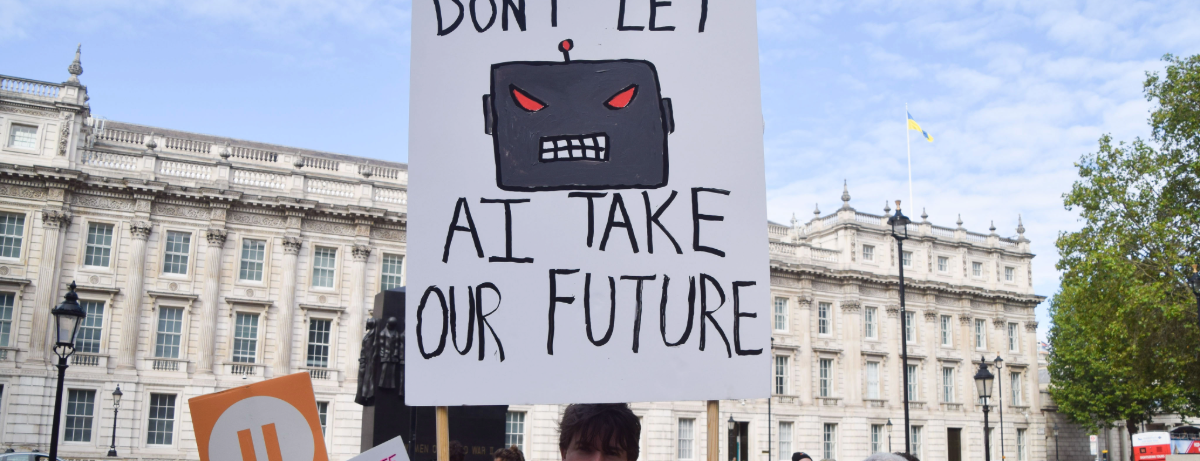

We spend enormous energy asking whether AI will do what we ask it to. We spend far less time asking: what will we ask it to do?
Our founder, Justin Rosenstein, published an op-ed in Tech Policy Press this week that asks that very question. His argument is simple: AI will do what we incentivize it to do. And right now, it rewards what is profitable, not necessarily what is good for us.
We get an abundance of cheap, sugar saturated food and diabetes rates sky rocket. We clear forests for short-term returns while ecosystems disappear. We have a world where children lose hours of their childhood to screens because their attention is profitable. We treat the physical toll on workers as a cost of doing business rather than something to prevent. We build social media for the community only to discover that keeping people scrolling is more profitable than to connect.
Justin knows that last one intimately. He helped build the “like” button and saw it as a tool designed to bring people together to turn social connections into a cycle of checking, comparing, and chasing validation – because that’s what the business model rewarded.
AI could apply that same logic faster and at a greater scale. So the question isn’t only whether AI is aligned with what we ask it to do. It’s whether the economy AI lives in is aligned with what we actually want.
Aligning the economy
Regulation matters, but these only tell companies what they can’t do. Not what we should reward instead.
Economic alignment means changing the incentives: rewarding what we want more of and making harmful outcomes less profitable.
How do we decide what we want? That’s where economic democracy comes in. Giving people a say in how resources are allocated and the economy serves them.
This isn’t a theory. Communities across the globe are already doing so. France, Brazil, America and more. Now we’re asking: can we do it at the scale of the whole economy?
Where One Project comes in
We believe that the same AI that could supercharge extraction could help millions of people find common ground, decide together, and shape an economy around what we value. We exist to make this path real.
Common, the platform. Infrastructure that lets communities deliberate, find agreement, and deduce together. It’s the machinery for economic democracy, built to scale from a city budget to a national initiative.
Common Sense, the evidence. We study how economic democracy plays out in real communities around the world so the case rests on evidence from the ground, not hypotheticals.
The Common Action Fund, the capital. Ideas and evidence aren’t enough. Resources need to be moved to the organizations and people who are building this economy. The Common Action Fund puts capital where it needs to be for us all to flourish.
The three things, working together, can change how our economy works, so it works for all.
Join us on LinkedIn to continue the conversation.